Rectus abdominis diastasis – what does it mean, and is it a problem?
30 Oct 2025
Recent research has changed our understanding of this normal muscle separation that occurs in pregnant women, and how to assess and treat it after the birth of your baby. In the past, it was thought that abdominal exercises such as crunches, may make this worse. As we seek to better understand a woman’s body and the changes experienced in pregnancy, birth and postpartum, here at Consano we have delved into the updated science around this common (and often worrying) abdominal change. Read on to better understand the updated evidence and how to approach recovery postpartum. The first step is assessment, followed by individual management – part of our expertise as physiotherapists who have specialised in understanding issues uniquely related to being pregnant and birthing.
What is Diastasis Recti?
During pregnancy, your abdominal muscles gently stretch apart to make room for your growing baby. You have four layers of abdominal muscle, each with differing and integrating functions. The connective tissue in between the two sides of the ‘top layer’ muscle softens and widens. This is known as diastasis recti (DRA/RAD) or abdominal separation. Almost every pregnant woman experiences it, and for most, it heals naturally after birth as hormones rebalance, your uterus contracts down to its usual size, and your muscles recondition to support you in day to day life.
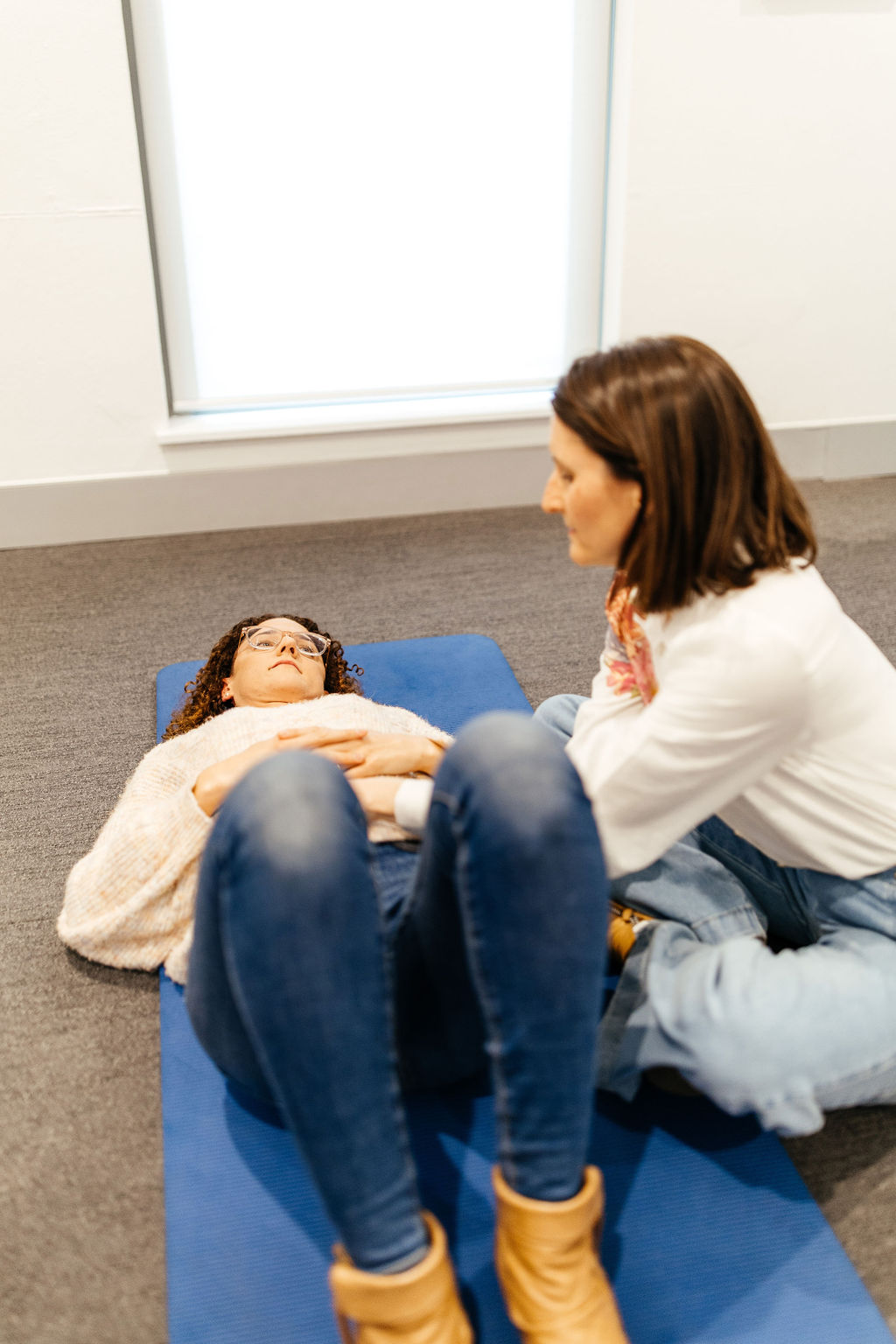
DRA is usually measured in the clinic by observing the abdomen, as well as by palpating (pressing) the abdominal muscles at rest and during activity. Both the width – inter-recti distance (IRD) – and depth is measured. Research shows that at the end of pregnancy, the average IRD is 67mm and by six months postpartum, 80% of women’s IRD reduced below 34mm. This highlights that the body has a natural, intelligent healing process, especially after birth.
The first 8 weeks: a window for healing
The early postpartum period is a special time. Your body is laying down new type I collagen – the strong, permanent fibers that firmly support your abdomen. This abdominal tissue is called fascia. Think of it like wet concrete; if it’s supported in the right position, it will set strong and close together. That’s why the first eight weeks are about support and recovery, not heavy strengthening.
Skip early deep core training
Traditional advice to “zip up” the core using transversus abdominis (TA) activation may sound good, but studies show that in some women it can pull the IRD further apart in early healing. A 2019 study found that women who did TA-only exercises had worse abdominal recovery than those who did nothing. This is a significant change from what we previously thought and consequently has changed our advice and management as up-to-date physiotherapists.
Gentle support works better
Your abdominals are meant to work as a team; rectus abdominis (“six-pack” muscle), obliques (waistline/twisting muscles), and the deep core together. When these muscles activate in balance, they naturally help bring the abdominal wall back together.
Early (0–8 weeks):
– Use a gentle binder or compression shorts for comfort and support.
– Try small, controlled head lifts or mini crunches following assessment with your pelvic health physiotherapist
– Focus on breathing, posture, and gentle daily movement.
– Avoid strong “draw-in” cues that hollow your belly.
-at Consano we can advise and provide all the above management on an individual basis, including supportive garments.
Later (after 8 weeks):
– Gradually strengthen the whole abdominal wall. This will include a variety of exercises. Your pelvic health physiotherapist can guide you in a program, to help you make a start and progress over time.
– Include full-body movements (eg squats, side bends, planks).
– Add resistance as your body is ready.
Don’t fear “doming”
Seeing your tummy “dome” slightly isn’t necessarily bad. There’s no research showing that doming impacts tissues negatively, it’s often just how your body responds with movement. Doming may even be protective of the pelvic floor and pelvic organs, in some women, as the pressure is distributed throughout the core under load. Rather than avoiding movement, focus on good technique, breathing, and control.
Trust the process
Your postpartum body is healing in many wondrous ways. When you support that process, you’ll recover to be stronger and more confident in your body. It is possible to regain strength anytime, however the first eight weeks determine abdominal structure to a large degree. Let your body do what it knows how to do. And if you need help, give us a call.